
Reducing our greenhouse gas emissions and adapting to mitigate climate change impacts is now one of our most material sustainability topics. Nufarm has positioned itself to take climate action by responding with innovative solutions and taking actionable steps to reduce our greenhouse gas emissions.
Decarbonising emissions-intensive industries to contribute to climate action
There is an urgent need to produce renewable feedstocks to help decarbonise hard-to-abate sectors such as aviation.[1] Greener alternatives that can replace the liquid fossil fuels we rely on to meet our ongoing transport needs are an important part of the solution to reduce our carbon emissions from air, land, and sea transport. Nufarm’s bioenergy platform consists of two sources: carinata and energy cane.
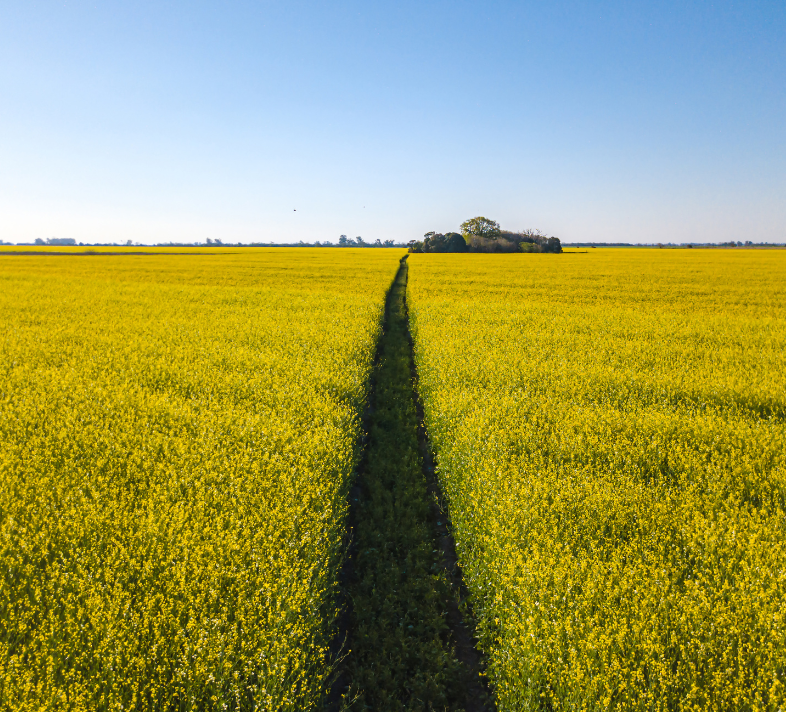
Nufarm’s carinata is an independently certified[2], non-food cover crop, processed for its oil to create a lower-carbon biofuel when compared with fossil fuels. In February 2022, Nufarm secured a 10-year off-take agreement with bp, who transform the carinata oil into a sustainable biofuel. Beyond serving as a sustainable, lower-carbon fuel source that can replace fossil fuels and cut emissions, our carinata also captures atmospheric carbon and enhances soil carbon, thus improving soil health.
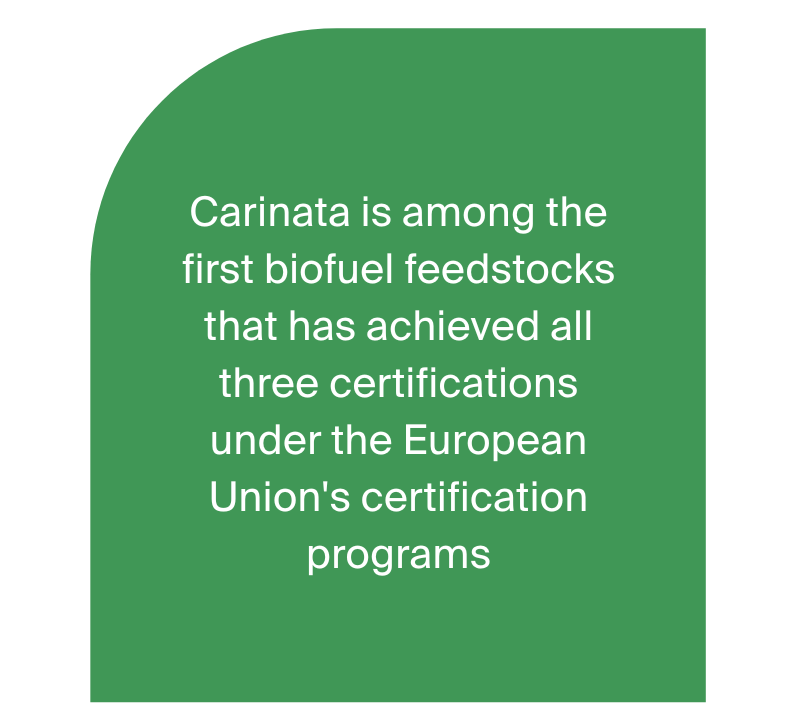
Carinata is among the first biofuel feedstocks that has achieved all three certifications under the European Union’s certification programs: RSB EU Market Access, RSB CORSIA[3] and RSB Global Advanced Products[4].
Energy cane is a specially bred crop that produces greater ethanol and bio-electricity per hectare of production than traditional sugar cane. It boasts 50 to 100 per cent more biomass than conventional sugar cane, which can increase ethanol output by 20 to 30 per cent per hectare. Additionally, its growth characteristics allow for 8 to 10 harvests, compared with 4 to 5 for traditional sugar cane, effectively doubling the crop’s longevity. Energy cane can be grown on degraded land that is not suitable for primary food production, providing a positive land-use impact.
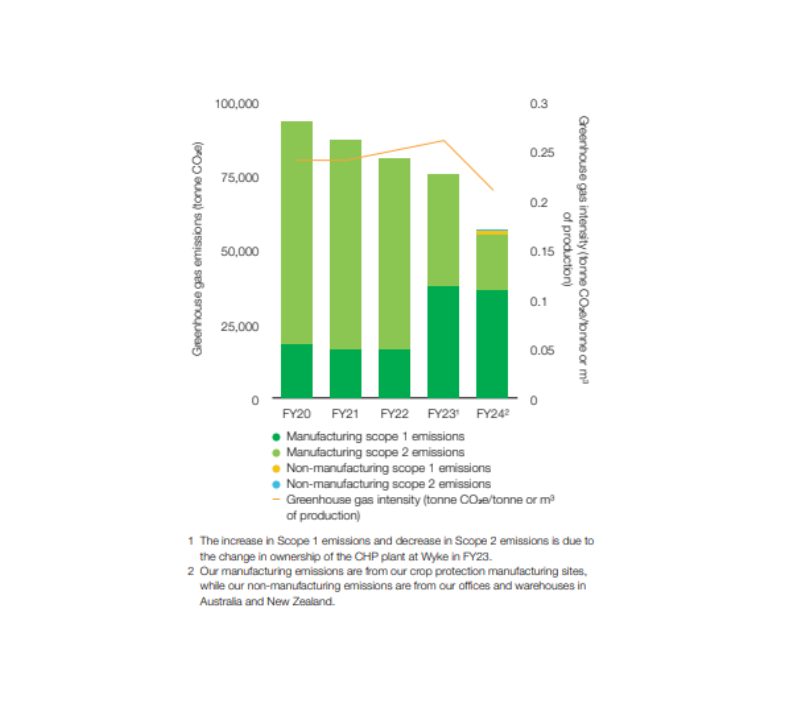
Greenhouse gas emissions
We are working to reduce our own operational climate impacts and set a target to reduce scope 1 and 2 emissions from our crop protection manufacturing sites only by 30 per cent by FY30, measured from our FY20 baseline.
In line with our strategy to reduce our greenhouse gas emissions, this year we established a power purchase agreement (PPA) for our Australian sites; Horsham and Pipe Road, Laverton. Emissions intensive synthesis operations at Pipe Road drive most of the demand, and these have been recently expanded. While our Horsham site is a relative low emitting site, combining its energy requirements with Pipe Road delivered a better economic outcome for the site and will also deliver some emissions reduction benefit.
The five-year PPA commenced in July 2024 and secures renewable energy from Origin Energy’s Stockyard Hill Wind Farm near Ballarat in Victoria. The large-scale renewable certificates (LGCs) will allow us to progressively reduce our greenhouse gas emissions as we step down towards our emissions reduction target.
References
Our sources
[1] Masum, FH et al. (2023) Supply chain optimization of sustainable aviation fuel from carinata in the southeastern United States, Renewable and Sustainable Energy Reviews, Vol 171, January 2023, 113032.
[2] Carinata is certified by the Roundtable on Sustainable Biomaterials (RSB)
[3] RSB CORSIA specifies requirements for operators along the supply chain to produce SAF that is eligible under the Carbon Offsetting and Reduction Scheme for International Aviation (CORSIA), and complies with RSB’s sustainability requirements – thus allowing aviation leaders to make powerful claims on GHG reductions and other important sustainability aspects such as food security, environmental protection and human rights.
[4] RSB Global Advance Products enables the certification of non-energy products like plastics, textiles, pharmaceuticals, packaging, tableware, cosmetics, nutritional supplements, food, feed, pulp, paper and many others.